
For vocational and skill training institutions, accreditation is a valuable step towards establishing trust, demonstrating quality, and creating stronger opportunities for growth. However, many training providers are often unsure about what the accreditation process involves and what they need to do before starting their application.
The IQA US accreditation process provides a clear framework for institutions to showcase their commitment to quality education, effective management, and continuous improvement. By understanding each stage of the journey, organisations can prepare better and approach the process with confidence.
Let’s explore the key stages involved in achieving accreditation.
Begin with the Accreditation Application
Every accreditation journey starts with an application. This is the stage where an institution formally introduces itself and shares important details about its operations.
Applicants typically provide information about their organisation, training programmes, administrative structure, and learning activities. These details help the accreditation team understand the institution’s background and determine the requirements for the review process.
Taking time to complete the application accurately can make the entire process more efficient and reduce the need for additional follow-ups.
Key outcome:
A complete application creates a strong foundation and demonstrates the institution’s readiness to meet quality expectations.
Review and Evaluation of Institutional Standard
Once the application is accepted, the evaluation stage begins.
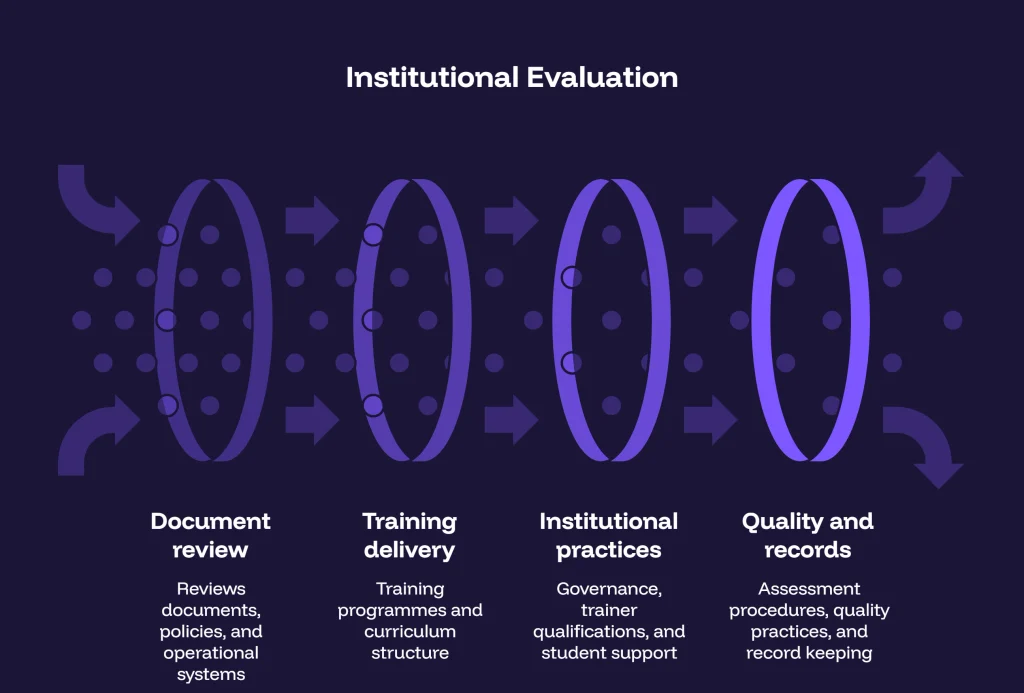
During this phase, the accreditation team reviews the institution’s documents, policies, and operational systems to assess how effectively it manages training delivery and maintains quality standards.
The evaluation may cover areas such as:
- Institutional governance and management
- Training programmes and curriculum structure
- Trainer experience and qualifications
- Student support services
- Assessment and examination procedures
- Quality management practices
- Record keeping and administrative systems
The objective is to understand how the institution operates and whether it has effective processes in place to provide consistent learning experiences.
Key outcome:
The evaluation helps identify institutional strengths and encourages continuous improvement in training quality and operations.
Accreditation Assessment and Approval Process
After completing the evaluation, the assessment results are reviewed before a final decision is reached.
In some cases, institutions may be asked to provide additional information or clarification to support their application. Once all necessary requirements have been successfully addressed, the accreditation status is confirmed.
This structured approach ensures that accreditation is awarded to institutions that demonstrate genuine commitment to maintaining recognised standards.
Key outcome:
A transparent assessment process builds confidence that accredited institutions represent quality and reliability.
Completion of Accreditation Fees
As part of the accreditation procedure, institutions complete the required fee payments based on their accreditation category and selected services.
These fees contribute to the administration of the accreditation programme, evaluation activities, documentation processing, and certificate preparation.
Understanding the applicable costs in advance allows institutions to plan effectively and manage the accreditation journey without unnecessary delays.
Key outcome:
Clear financial planning supports a smooth and organised accreditation experience.
Certificate Issuance and Official Recognition
After successfully completing all accreditation requirements, the institution receives official recognition as an accredited organisation.
The accreditation certificate serves as confirmation of the institution’s approved status. Accredited institutions may also be permitted to display approved accreditation details and branding elements in their official communications, subject to applicable guidelines.
This recognition can enhance visibility across websites, brochures, social media platforms, and other promotional channels.
Key outcome:
Accreditation strengthens institutional reputation, increases stakeholder confidence, and provides a recognised symbol of educational quality.
Preparing Before You Apply: What Institutions Should Have Ready
Good preparation can make the accreditation process faster and more effective. Before submitting an application, institutions should ensure they have the necessary information and documentation available.
Important items to prepare include:
- Institutional registration and organisation details
- Course and programme descriptions
- Policies and operational procedures
- Trainer profiles and qualification records
- Student records and assessment procedures
- Quality assurance documentation
- Evidence of continuous improvement activities
- Administrative and management records
Having these materials organised demonstrates professionalism and helps the evaluation process progress smoothly.
Final Thoughts
Accreditation is not simply about receiving a certificate it is about proving an institution’s dedication to quality, reliability, and continuous development.
The IQA US accreditation journey provides training providers with an opportunity to review their systems, strengthen their operations, and build greater confidence among students, employers, and industry partners.
With proper preparation and an understanding of each stage, institutions can approach accreditation with greater clarity and use the recognition gained to support long-term growth and success.