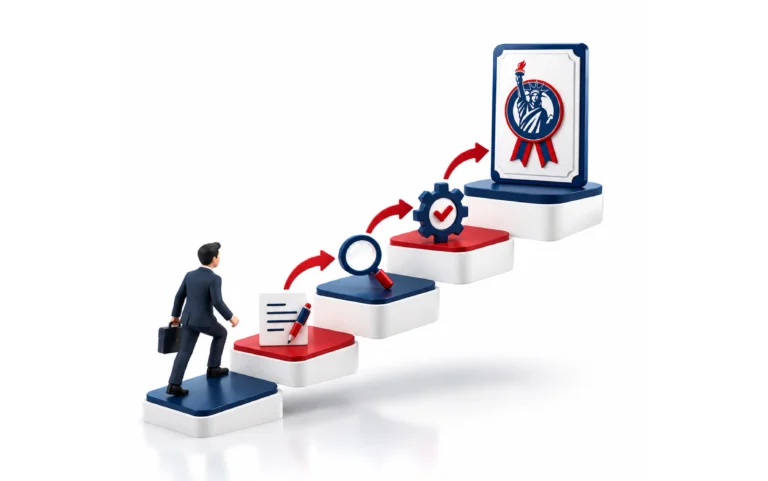

Educational quality is no longer something institutions can demonstrate once and then assume will remain unchanged. As technology, teaching methods, professional requirements, and workforce expectations continue to evolve, the systems used to maintain educational standards must evolve as well. Traditional accreditation has an important role in establishing whether an institution meets defined quality requirements, but a periodic review alone may not provide a complete picture of how an institution performs throughout the years between formal evaluations.
This creates an important case for accreditation reform. Institutions need quality assurance systems that do more than confirm compliance at specific intervals. They need continuous processes that monitor performance, evaluate outcomes, identify gaps, respond to feedback, and support improvement as conditions change.
Continuous quality assurance shifts the focus from demonstrating quality at a particular point in time to maintaining quality as an ongoing institutional responsibility. It does not eliminate the value of accreditation. Instead, it strengthens the purpose of accreditation by ensuring that the standards established through formal evaluation remain part of everyday institutional practice.
The Limitations of Periodic Accreditation
Accreditation provides institutions with an external framework for demonstrating quality. A formal evaluation can examine areas such as governance, curriculum design, assessment systems, faculty qualifications, learning resources, operational processes, and internal quality assurance. The process can provide institutions with an important benchmark and give students and other stakeholders greater confidence in the quality systems of an institution.
However, periodic accreditation has an inherent limitation. It evaluates an institution during a defined review period. Once that evaluation is completed, circumstances can change.
Faculty members may change. Programs may be modified. New technologies may alter the skills required in a particular industry. Student expectations may evolve. Assessment methods may need to adapt to new learning environments. Institutional processes may also change as an organization grows.
If these developments are not monitored consistently, a gap can emerge between the quality demonstrated during an accreditation review and the quality being delivered later.
This can be described as quality drift. Quality drift does not necessarily mean that an institution deliberately lowers its standards. It can happen gradually when processes that were appropriate at the time of accreditation are not regularly reviewed against changing requirements.
For example, a training program may initially have strong alignment with industry needs. Several years later, new technologies or professional practices may have changed the competencies expected from graduates. Without an effective review mechanism, the original curriculum may continue to be delivered even though its relevance has gradually weakened.
The same issue can occur with assessment. An assessment model may have been appropriate when a program was first evaluated, but changing delivery methods and digital learning environments can introduce new requirements around assessment security, transparency, and learner verification.
Periodic accreditation therefore provides an important quality checkpoint, but institutions also need mechanisms that operate between those checkpoints.
Why Continuous Quality Assurance Is Different
Continuous quality assurance treats quality as a cycle rather than an event.
Instead of concentrating institutional evaluation around a formal accreditation visit, continuous QA integrates monitoring and improvement into regular institutional operations. Evidence is collected, reviewed, interpreted, and used to inform decisions.
This approach provides a more dynamic view of institutional performance because quality is evaluated over time rather than through a single historical snapshot.
The concept is increasingly relevant as education becomes more closely connected with rapidly changing skills requirements. The World Economic Forum’s Future of Jobs Report 2025 projects that 39% of workers’ existing skill sets will be transformed or become outdated over the 2025–2030 period. The report also identifies skills gaps as a major barrier to business transformation for employers.
These developments have direct implications for educational institutions. Programs cannot remain relevant simply because they satisfied a quality standard several years earlier. Institutions need processes for regularly examining whether curriculum, learning outcomes, assessment practices, and delivery methods continue to meet current expectations.
Continuous quality assurance provides this mechanism.
It allows quality teams and institutional leaders to move from a retrospective approach to a more proactive one. Rather than waiting for the next formal review to identify weaknesses, institutions can monitor defined indicators, evaluate feedback, and introduce improvements as needed.
This makes ongoing institutional evaluation an essential part of modern accreditation reform.
What Continuous Quality Assurance Looks Like in Practice
A continuous QA model is not simply a requirement to conduct more audits. It is a structured process that connects monitoring with decision-making and improvement.
One important component is regular institutional reporting. Periodic reporting creates opportunities for institutions to review their activities, document developments, identify areas requiring attention, and demonstrate how quality standards are being maintained.
IQA-US incorporates this principle into its quality framework. Its Governance framework identifies a continuous improvement cycle involving Annual Reporting, Periodic Review, Benchmarking, and Feedback Loop.
Each stage contributes to a broader quality process.
Annual reporting provides structured evidence about institutional performance. Periodic review creates opportunities for deeper evaluation. Benchmarking allows institutions to compare their performance against established standards or relevant expectations. Feedback then informs corrective action and future improvement.
The cycle can continue rather than ending when a review report is issued.
Curriculum monitoring is another important component. Educational programs should be reviewed against their intended learning outcomes and changing professional requirements. Continuous QA can examine whether course content remains relevant, whether competencies are clearly defined, and whether assessments measure the outcomes that programs claim to develop.
IQA-US’s program certification framework places emphasis on learning outcomes, curriculum structure, competency mapping, assessment methodology, industry relevance, and ongoing quality monitoring.
Assessment monitoring also has an important role. Modern digital assessment systems can provide structured information about examination activity, candidate performance, results, and assessment processes. IQA-US’s Smart Assessment framework includes secure authentication, timed assessments, randomized questions, automated result calculation, performance reporting, and monitoring mechanisms.
Such systems do not replace human quality judgment. Instead, they can provide institutions with structured evidence that supports evaluation and improvement.
Feedback loops complete the process. Student feedback, faculty observations, assessment results, employer perspectives, internal audits, and other relevant evidence can help institutions understand where improvement is required.
The important point is that feedback should lead to action. A continuous QA model should connect evidence to decisions, decisions to improvements, and improvements to subsequent evaluation.
From Compliance to Continuous Improvement
One of the biggest advantages of continuous quality assurance is the opportunity to change the institutional culture surrounding quality.
In a purely periodic model, quality activity can become concentrated around preparation for an accreditation review. Institutions may devote significant attention to documentation and evidence when an evaluation approaches, only for quality activity to become less visible afterward.
Continuous QA changes the emphasis.
Quality becomes part of normal institutional management rather than an activity that occurs primarily because an external review is approaching. Academic leaders can monitor program performance, quality teams can review evidence, faculty can contribute to improvement initiatives, and institutional leadership can use quality information when making strategic decisions.
This does not mean that documentation becomes irrelevant. Documentation remains important because institutions need reliable evidence of how their systems operate. The difference is that documentation becomes part of an ongoing quality process rather than something prepared primarily for a particular review.
This approach can also make accreditation outcomes more meaningful. When an institution already maintains strong internal monitoring and improvement processes, external accreditation can evaluate a functioning quality culture rather than simply assessing a collection of historical documents.
Benefits for Institutions
Continuous quality assurance can strengthen institutional performance in several ways.
First, it can provide greater visibility into institutional operations. Regular monitoring can help leaders understand whether policies and procedures are working as intended and where additional attention may be necessary.
Second, it can support stronger academic governance. When institutions regularly review curriculum, assessment, faculty requirements, learner outcomes, and operational processes, decision-making can become more evidence-based.
Third, continuous QA can support institutional adaptability. Education providers operate in environments where technologies, professional expectations, and learner needs can change quickly. A continuous improvement process gives institutions a structured mechanism for responding to those changes.
IQA-US describes its accreditation framework as covering areas including governance, curriculum design, learning outcomes, assessment integrity, faculty credentials, infrastructure, learning resources, internal quality assurance, and operational compliance. Its framework also includes ongoing monitoring through annual reporting, periodic audits, program updates, benchmarking, and continuous improvement.
This demonstrates how accreditation and continuous quality assurance can operate together. Accreditation establishes the standards, while ongoing monitoring helps institutions maintain and develop them.
Benefits for Students
Students are among the most important stakeholders in any quality assurance system.
For learners, educational quality is not simply a certificate or accreditation status. It includes the relevance of the curriculum, effectiveness of learning delivery, fairness of assessment, clarity of learning outcomes, availability of learning resources, and confidence that academic processes are being managed appropriately.
Continuous QA gives institutions opportunities to examine these areas regularly.
Curriculum reviews can help ensure that learning content remains relevant. Assessment monitoring can support consistency and academic integrity. Feedback mechanisms can identify areas where learners experience difficulties. Performance information can help institutions evaluate whether intended learning outcomes are being achieved.
Digital credential and verification systems can provide an additional layer of transparency. IQA-US provides digital credentials with unique verification identifiers and centralized verification, allowing authorized stakeholders to validate credential information through its digital system.
Together, these processes contribute to a stronger quality ecosystem in which students can benefit from institutions that treat quality as an ongoing responsibility.
Benefits for Employers
Employers also have a growing interest in the quality and relevance of educational outcomes.
A qualification provides useful information, but employers increasingly need confidence that learning outcomes correspond with meaningful competencies. This is particularly important in technical, vocational, professional, and skills-focused education.
Continuous quality assurance can support this connection by encouraging institutions to review curriculum content, competency mapping, assessment methods, and industry alignment on an ongoing basis.
The World Economic Forum’s research highlights the scale of workforce transformation expected during this decade, with employers identifying skills gaps as a significant challenge.
Institutions that regularly evaluate whether their programs reflect changing competency requirements can be better positioned to respond to these developments.
Secure credential verification also matters to employers. When qualifications can be independently verified through a structured digital system, organizations can have greater confidence in the authenticity of credentials presented to them.
Continuous QA therefore has implications beyond the institution itself. It can contribute to greater transparency between education providers, learners, and the employment ecosystem.
The Challenges of Continuous Quality Assurance
Moving from periodic evaluation to continuous QA is not without challenges.
The first challenge is resources. Regular monitoring requires staff time, institutional coordination, appropriate systems, and leadership commitment. Institutions need to ensure that quality processes are sustainable rather than creating unnecessary administrative pressure.
The second challenge is data management. Continuous evaluation can generate substantial amounts of information. Institutions need to identify which indicators are genuinely useful and ensure that information is stored, protected, and used appropriately.
The third challenge is institutional culture. Continuous QA works best when quality is understood as a shared responsibility rather than the responsibility of a single accreditation or compliance team.
There is also a risk of turning continuous QA into continuous paperwork. If institutions focus only on collecting documents and completing forms, they may reproduce the weaknesses of a periodic compliance model in a more frequent format.
Effective continuous quality assurance should therefore remain focused on meaningful evidence, informed decision-making, improvement, and outcomes.
Digital systems can help streamline parts of this process, but technology should support quality management rather than become a substitute for professional judgment.
A New Model for Institutional Quality
The future of accreditation does not necessarily require abandoning formal accreditation. Instead, it requires institutions and accreditation bodies to reconsider how formal evaluation fits into a wider quality ecosystem.
Accreditation can establish an external benchmark. Continuous quality assurance can help institutions maintain and improve performance against that benchmark.
This combination creates a more resilient approach to institutional quality.
Instead of preparing for quality only when an accreditation review approaches, institutions can maintain an ongoing cycle of evaluation. Instead of viewing feedback as an isolated report, they can use it to inform future decisions. Instead of treating curriculum approval as the end of a process, they can continuously examine whether programs remain relevant.
This is the fundamental principle behind ongoing institutional evaluation.
Quality should not be something an institution demonstrates only at selected moments. It should be something an institution continually works to maintain.
Conclusion
Traditional accreditation remains an important mechanism for establishing educational standards, external accountability, and institutional credibility. Its limitation is not that formal evaluation lacks value, but that no single review can capture every change that occurs throughout an institution’s development.
Continuous quality assurance addresses this gap by creating an ongoing cycle of reporting, monitoring, review, benchmarking, feedback, and improvement.
For institution leaders, this means greater visibility and adaptability. For students, it can support relevant programs, transparent assessment, and stronger academic processes. For employers, it can contribute to greater confidence in educational outcomes and credential verification.
As education and workforce requirements continue to change, quality assurance must become equally dynamic. Accreditation can establish the standard, but continuous quality assurance helps keep that standard alive.
Learn about continuous quality assurance models for your institution